
Perimenopause vs. Menopause: How to Tell Which Stage You Are In
The words get used interchangeably, including by clinicians, and the confusion can have real consequences. Women in perimenopause are sometimes told they are "not menopausal" and sent away without help.
The short answer: Menopause is a single day, defined retrospectively as twelve consecutive months without a period. Perimenopause is everything leading up to that day, while postmenopause is everything after.

Menopause is one day. Perimenopause is the transition.
Understanding the distinction can make it easier to recognize what your body is actually going through.
Menopause is defined retrospectively after twelve consecutive months without a menstrual period. There is no single test that tells you on the exact day that menopause has occurred.
Perimenopause is the years leading up to menopause. It commonly lasts four to ten years, although the experience varies considerably from woman to woman.
If you are still having periods at all, including irregular or unpredictable periods, you are generally still in the perimenopausal transition.
Where are you in the transition?
The transition is gradual rather than a single switch. These stages help provide a framework for understanding the changes.
Late Reproductive
Periods are generally regular, but subtle changes in cycle length, PMS, sleep, mood or recovery may begin to appear.
Early Perimenopause
One of the early clues is a change in cycle length, with periods varying by seven or more days from their usual pattern.
Late Perimenopause
Periods may become much more unpredictable, with gaps of 60 or more days becoming possible.
Menopause & Postmenopause
Menopause is reached after twelve consecutive months without a period. Everything afterward is considered postmenopause.
Why perimenopause can be the harder stage
Perimenopause ↗
During perimenopause, estrogen can become highly variable. Levels may rise sharply and then fall, repeatedly. That hormonal volatility can contribute to mood changes, sleep disruption, breast tenderness, heavier bleeding and changes in migraine patterns.
Postmenopause →
After menopause, estrogen levels are generally lower and more stable. The body is no longer moving through the same cycle of large hormonal fluctuations, although symptoms such as hot flashes or vaginal changes can continue.
The important distinction: Feeling worse during perimenopause does not mean something is necessarily wrong. The transition itself can produce significant changes while hormone levels are fluctuating.
Symptoms that may point to each stage
Symptoms overlap, but some patterns are more commonly associated with the perimenopausal transition while others become more noticeable after menopause.
Leaning Perimenopausal
- Cycles becoming unpredictable
- Heavier or changing periods
- New or worsening PMS
- Breast tenderness
- Sleep disruption or early-hours waking
- Changes in migraine patterns
- Noticeable mood changes
Leaning Postmenopausal
- No period for 12 or more months
- Vaginal dryness
- Skin and hair thinning
- Bone density concerns
- More consistent hot flash patterns
- Changes related to lower estrogen levels
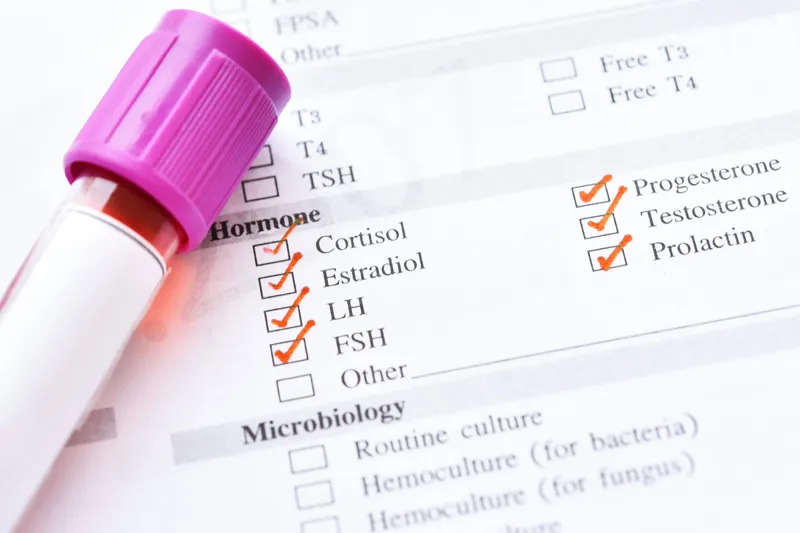
Can a blood test tell you which stage you're in?
Not reliably. FSH can fluctuate significantly from one cycle to another during perimenopause, which means a single blood test may not accurately represent where you are in the transition.
Your menstrual pattern over time, considered alongside your symptoms, remains one of the most useful ways to understand the transition.
Perimenopause vs. menopause: common questions
How long does perimenopause last?
Perimenopause commonly lasts four to ten years, although the duration varies considerably between women.
Can I still get pregnant during perimenopause?
Yes. Ovulation becomes less predictable during perimenopause, but it does not necessarily stop immediately. Pregnancy remains possible until menopause has been reached.
What is the average age of menopause?
The average age of menopause in the United States is around 51. A broad normal range is approximately 45 to 55.
Is early perimenopause a problem?
Beginning the transition before age 40 is worth investigating. Beginning in the early 40s can still fall within the expected range.
Do symptoms stop once I reach menopause?
Many symptoms settle as hormones become more stable, but some symptoms, including hot flashes, can continue for years into postmenopause.
Not sure where you are in the transition?
Your cycle history, symptoms and overall health can provide important clues. A personalized conversation can help you understand what may be happening and what to investigate next.
Free consultation with Integrative Medicine US
Free Consultation: (954) 884-0099